Desyrel (Trazodone)
Desyrel is the original brand of trazodone, an atypical antidepressant from the SARI class. It is approved for major depression at higher doses but most contemporary use is low-dose bedtime prescribing for chronic insomnia, where its sedating profile makes it a common sleep aid.
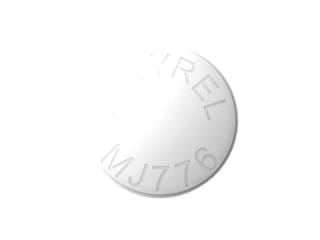
- Active ingredients
- Trazodone
- Manufacturer
- Various generics
- Dosage forms
- tablet
- Category
- Anti-Depressants
What is it?
Desyrel is the historical brand name under which Bristol-Myers Squibb (now Mead Johnson) introduced trazodone in the United States in 1981. The brand has been largely retired in many markets in favour of authorised generic trazodone, which has been the standard form for decades. Despite the brand retirement, Desyrel remains a commonly recognised name. Contemporary use is dominated by low-dose off-label prescribing for chronic insomnia rather than the original major depressive disorder indication.
Active ingredients
Each Desyrel-equivalent generic trazodone tablet contains 50mg, 100mg, 150mg or 300mg of trazodone hydrochloride. The active substance is identical between historical Desyrel-branded tablets and current authorised generic trazodone, with bioequivalence required by the regulator. An extended-release version (Oleptro) is also available for once-daily depression dosing.
Forms and dosages
Trazodone is supplied as immediate-release tablets in 50, 100, 150 and 300mg strengths. For insomnia, typical dosing is 25–100mg at bedtime, with most users finding 50mg sufficient. For depression, the dose is 150–300mg/day, often divided initially because of sedation. Take with food to reduce nausea and improve absorption. Bedtime dosing is standard for sleep; sedation makes daytime depression dosing impractical for most patients.
Indications
Desyrel (trazodone) is approved for major depressive disorder. It is widely used off-label for insomnia (most common modern use), depression with anxiety, post-traumatic stress disorder, and adjunctive use with SSRIs for sleep. According to current sleep guidelines, low-dose trazodone is one of several options for chronic insomnia, particularly when standard hypnotics (zolpidem, eszopiclone) are unsuitable due to dependence concerns.
How it works
Trazodone is classified as a serotonin antagonist and reuptake inhibitor (SARI). It blocks 5-HT2A receptors and weakly inhibits serotonin reuptake, while also producing strong antagonism at H1 histamine and α1-adrenergic receptors. The antihistamine and α1-blocking activity dominate at low doses, producing sedation; antidepressant effect requires higher doses where serotonergic activity becomes meaningful. The 5–9 hour half-life makes it well suited to once-nightly bedtime dosing for sleep.
Frequently asked questions
Why is Desyrel used for sleep instead of as an antidepressant? ▾
At low doses (25–100mg), trazodone's H1 antihistamine and α1-blocking effects dominate, producing sedation without significant antidepressant activity. Antidepressant doses (150–300mg) cause too much daytime sedation and orthostatic effects for routine use. According to clinical practice, low-dose bedtime trazodone is one of the most commonly prescribed sleep aids in the United States, especially when chronic use is anticipated.
Is Desyrel addictive? ▾
Trazodone has minimal abuse liability and does not produce tolerance or dependence with chronic use, unlike benzodiazepines and Z-drugs. According to current guidelines, this makes it a preferred option for chronic insomnia where long-term hypnotic use is anticipated. Discontinuation does not produce withdrawal at typical sleep doses.
What should I do if priapism occurs with Desyrel? ▾
Priapism (an erection lasting more than 4 hours) is a rare but serious adverse effect of trazodone caused by α1-adrenergic blockade. It requires immediate medical attention because prolonged engorgement can damage cavernosal tissue. According to the prescribing information, men starting trazodone should be counselled about this possibility and instructed to seek emergency care if it occurs.
How does Desyrel compare with zolpidem (Ambien) for sleep? ▾
Zolpidem is a Z-drug GABA agonist that produces faster sleep onset but carries dependence and tolerance risk with chronic use, plus rare complex sleep behaviours. Trazodone produces sedation through antihistamine activity with no dependence risk but takes 30–60 minutes to act. According to current sleep guidelines, trazodone is preferred for chronic use; zolpidem is preferred for short-term sleep onset issues.
Is Desyrel the same as generic trazodone? ▾
Yes — the historical Desyrel and current authorised generic trazodone tablets contain the same active ingredient at the same strengths and have demonstrated bioequivalence. The Desyrel brand has been largely retired and most current prescribing is on the authorised generic. The generic is significantly cheaper and clinically equivalent in nearly all cases.
Related medications


Sources
This page is compiled from the official prescribing information for Trazodone. The links below open a search for that active ingredient in each register, so you always reach the current version of the label rather than a cached copy.
The information on this website is provided for reference and educational purposes only. It does not replace consultation with a qualified healthcare professional.