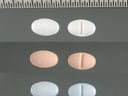
What to do if Xanax is in shortage
Drug shortages happen periodically — manufacturing issues, supply chain disruptions, regulatory holds — and Xanax (Alprazolam) may become temporarily unavailable in some pharmacies or countries. For chronic users at 0.25mg, 0.5mg, 1mg, 2mg, knowing how to handle a shortage prevents unnecessary treatment interruption.
How shortages work for Xanax
When Xanax is in shortage, the pharmacist usually has several options: dispense an authorised generic of Alprazolam, source from a different manufacturer of the same active ingredient, suggest a different formulation (e.g. liquid, dispersible) or, in extended shortages, ask the prescriber to consider an alternative Anti-anxiety Medications agent. Alprazolam binds to the benzodiazepine site of the GABA-A receptor and allosterically enhances GABA-mediated chloride conductance, hyperpolarising central nervous system neurons.
Practical steps
According to general pharmacy practice, the first step in a Xanax shortage is to ask the pharmacist about authorised generic availability — most shortages affect a single brand or strength, not the entire supply of Alprazolam at 0.25mg, 0.5mg, 1mg, 2mg. The prescriber should be informed if the pharmacist needs to substitute or change formulation. Stockpiling or buying extra outside regulated channels is not the right response.
Frequently asked questions
What do I do if my pharmacy doesn't have Xanax? ▾
Ask the pharmacist whether an authorised generic of Alprazolam is available — usually yes — or whether another pharmacy in the area has stock of Xanax at 0.25mg, 0.5mg, 1mg, 2mg. The pharmacist can also contact the prescriber if a formulation switch is needed.
Will Xanax come back in stock? ▾
Most shortages are resolved within weeks to months as manufacturing or supply issues are fixed. Until then, the authorised generic of Alprazolam is the standard alternative and is clinically equivalent to Xanax at the same 0.25mg, 0.5mg, 1mg, 2mg strength.
More on Xanax
The information on this website is provided for reference and educational purposes only. It does not replace consultation with a qualified healthcare professional.