Saxenda (Liraglutide) for Chronic Weight Management
Saxenda is a prescription once-daily subcutaneous injection containing liraglutide, approved for chronic weight management in adults with obesity or with overweight and at least one weight-related comorbidity, and in adolescents from 12 years.
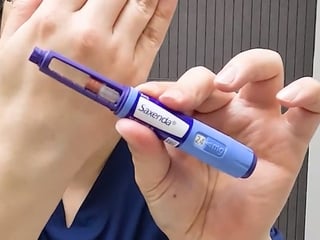
- Active ingredients
- Liraglutide
- Manufacturer
- Novo Nordisk
- Dosage forms
- pre-filled pen
- Available dosages
- 6 mg/mL
- Category
- Diabetes Treatment
What is it?
Saxenda is the brand name for liraglutide developed by Novo Nordisk specifically for chronic weight management. It was approved by the United States Food and Drug Administration in 2014 and by the European Medicines Agency in 2015. Saxenda uses the same active molecule as Victoza, but at a higher maintenance dose and for a different therapeutic indication. It is supplied as a multi-dose pre-filled pen for once-daily subcutaneous injection.
Active ingredients
Each pen contains liraglutide at 6 mg/mL and delivers daily doses ranging from 0.6mg to 3mg, with a maintenance dose of 3mg once daily. Liraglutide is a synthetic analogue of human glucagon-like peptide 1 modified with a fatty acid that binds reversibly to albumin, prolonging the half-life to about 13 hours.
Forms and dosages
Saxenda is administered once daily by subcutaneous injection in the abdomen, thigh or upper arm at any time of day, with or without food. According to the prescribing information, treatment starts at 0.6mg per day and is increased weekly by 0.6mg to a maintenance dose of 3mg per day, in order to limit gastrointestinal adverse effects. If a maintenance dose is not tolerated, the prescriber may consider a lower dose. Pens must be stored refrigerated before first use.
Indications
Saxenda is indicated as an adjunct to a reduced-calorie diet and increased physical activity for chronic weight management in adults with obesity (BMI 30 or higher) or with overweight (BMI 27 or higher) and at least one weight-related comorbidity such as hypertension, dyslipidaemia, type 2 diabetes or obstructive sleep apnoea. In several markets it is also approved in adolescents from 12 years with obesity. According to the prescribing information, treatment must be initiated and supervised by a clinician.
How it works
Saxenda acts on the GLP-1 receptor in the central nervous system and gastrointestinal tract to reduce appetite, slow gastric emptying and increase satiety. In the pancreas it enhances glucose-dependent insulin secretion and suppresses inappropriate glucagon release. The combined effect typically reduces caloric intake and produces gradual weight loss over months. Lifestyle measures, including a reduced-calorie diet and increased physical activity, are an essential part of the treatment plan.
Frequently asked questions
How is Saxenda different from Victoza? ▾
Both contain the same active molecule, liraglutide, but at different maintenance doses and for different indications. Saxenda is approved for chronic weight management at a maintenance dose of 3mg per day, while Victoza is approved for type 2 diabetes at maintenance doses of 1.2 to 1.8mg per day. According to the prescribing information, the two products are not interchangeable and should not be used together.
How much weight loss is expected with Saxenda? ▾
Randomised clinical trials in adults with obesity showed mean weight reduction of approximately 5% to 8% from baseline at 3mg per day after one year, alongside lifestyle intervention. Individual response varies and not every patient achieves these averages. According to the prescribing information, treatment continuation should be reassessed after several months if at least 5% of body weight has not been lost.
Can Saxenda be used in adolescents? ▾
Yes, in several markets Saxenda is approved for chronic weight management in adolescents from 12 years with obesity. Use in this population should always be initiated by a specialist clinician within a comprehensive plan that includes diet, physical activity and psychological support. According to the prescribing information, growth and pubertal development should be monitored during treatment, and the dose adapted to tolerability.
Does Saxenda require refrigeration? ▾
Yes. Unopened pens are stored in a refrigerator between 2°C and 8°C. After first use, the pen can be kept at room temperature below 30°C for up to 30 days, after which it must be discarded. Freezing damages the peptide. Cold-chain integrity is one reason regulatory agencies caution against purchasing GLP-1 agonists from unverified online sources.
What are the main contraindications for Saxenda? ▾
Personal or family history of medullary thyroid carcinoma, multiple endocrine neoplasia type 2 and known hypersensitivity to liraglutide are formal contraindications. Caution is required in patients with previous pancreatitis, severe gastroparesis or active gallbladder disease, and during pregnancy and breastfeeding, where Saxenda is not recommended. According to the prescribing information, the medical history and current medication list must be reviewed by a clinician before any prescription.
Related medications


Sources
This page is compiled from the official prescribing information for Liraglutide. The links below open a search for that active ingredient in each register, so you always reach the current version of the label rather than a cached copy.
The information on this website is provided for reference and educational purposes only. It does not replace consultation with a qualified healthcare professional.