Lantus (Insulin Glargine) Long-Acting Basal Insulin
Lantus is a prescription long-acting basal insulin containing insulin glargine at 100 IU/mL. It is used in adults and paediatric patients with type 1 diabetes and in adults with type 2 diabetes when basal insulin is required.
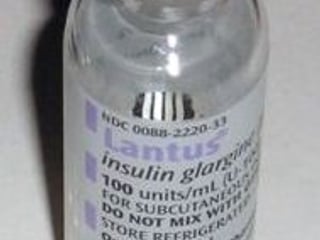
- Active ingredients
- Insulin Glargine
- Manufacturer
- Sanofi
- Dosage forms
- pre-filled pen , vial
- Available dosages
- 100 IU/mL
- Category
- Diabetes Treatment
What is it?
Lantus is the original brand name for insulin glargine 100 IU/mL, marketed by Sanofi and approved in 2000. It was the first long-acting basal insulin analogue widely used in clinical practice and is supplied as a pre-filled disposable pen and as cartridges and vials. Lantus is intended for once-daily subcutaneous administration as part of a comprehensive diabetes treatment plan that may include rapid-acting insulin and non-insulin therapies.
Active ingredients
Each millilitre of solution contains 100 international units (IU) of insulin glargine, a recombinant human insulin analogue produced in Escherichia coli. Two arginine residues are added to the B-chain and the A-chain glycine substitutes asparagine. These changes shift the isoelectric point so the molecule precipitates in subcutaneous tissue, from which it dissolves slowly over approximately 24 hours.
Forms and dosages
Lantus is administered once daily by subcutaneous injection at the same time of day. According to the prescribing information, the starting dose is individualised by the prescriber and is then titrated based on fasting glucose and clinical context. Doses are expressed in international units. The pen or vial is injected into the abdomen, thigh or upper arm, with rotation of injection sites. Lantus must not be administered intravenously and is not used in continuous subcutaneous insulin infusion pumps.
Indications
The medication is indicated in adults and paediatric patients with type 1 diabetes mellitus, and in adults with type 2 diabetes mellitus when basal insulin is required. It is used as part of regimens that may also include rapid-acting insulin at meals, oral antidiabetic agents or non-insulin injectables. According to the prescribing information, treatment must be initiated and adjusted by a clinician, with patient education on dose adjustment, sick-day rules and recognition of hypoglycaemia.
How it works
Insulin glargine binds the insulin receptor with similar affinity to human insulin, activating intracellular signalling that increases glucose uptake in muscle and adipose tissue, suppresses hepatic glucose production and promotes lipogenesis. The slow precipitation and gradual redissolution at the injection site result in a relatively flat plasma profile lasting approximately 22 to 26 hours. Prandial control usually requires a separate rapid-acting insulin or non-insulin therapy.
Frequently asked questions
What is the difference between Lantus and NPH insulin? ▾
Lantus is a long-acting analogue with a relatively flat 24-hour profile, while NPH is an intermediate-acting human insulin with a clear peak between four and ten hours after injection. In randomised trials, Lantus produces less nocturnal hypoglycaemia for similar HbA1c reduction and is usually given once daily. The choice depends on cost, availability, prescribing context and individual response, and is made by the clinician.
When should Lantus be injected? ▾
According to the prescribing information, Lantus is given once daily at the same time of day, often at bedtime or in the morning. Consistency in timing supports steady-state coverage and reduces glucose variability. The pen or vial is injected subcutaneously into the abdomen, thigh or upper arm, with rotation of sites to prevent lipohypertrophy. The precise dose, timing and combination with other therapies are determined by the prescriber.
How is Lantus different from Toujeo? ▾
Both contain insulin glargine, but Toujeo is a more concentrated formulation at 300 IU/mL, three times the concentration of Lantus 100 IU/mL. The U-300 product produces a flatter and longer profile and may reduce nocturnal hypoglycaemia in some patients, with slightly higher dose requirements. According to the prescribing information, switching between strengths requires careful dose retitration, supervised by the prescriber. The two are not interchangeable on a unit-for-unit basis without medical assessment.
Does Lantus require refrigeration? ▾
Yes. Unopened pens, cartridges and vials are stored in a refrigerator between 2°C and 8°C. After first use the pen or vial can be kept at room temperature below the limit defined in the leaflet for the period stated, after which it must be discarded. Freezing damages the product. Cold-chain integrity is one reason regulatory agencies caution against purchasing insulin from unverified online sources.
What are the main contraindications for Lantus? ▾
Known hypersensitivity to insulin glargine or any excipient is a formal contraindication. Lantus is not used to treat diabetic ketoacidosis, where rapid-acting insulin via continuous infusion is preferred. Caution is required in renal or hepatic impairment, in pregnancy where dose requirements change and in any condition that alters glucose metabolism. According to the prescribing information, the medical history and current medication list must be reviewed by a clinician before initiation.
Related medications


Sources
This page is compiled from the official prescribing information for Insulin Glargine. The links below open a search for that active ingredient in each register, so you always reach the current version of the label rather than a cached copy.
The information on this website is provided for reference and educational purposes only. It does not replace consultation with a qualified healthcare professional.