Trulicity (Dulaglutide) Once-Weekly Injection
Trulicity is a prescription once-weekly subcutaneous injection containing dulaglutide, a GLP-1 receptor agonist used in adults with type 2 diabetes to improve glycaemic control and to reduce major cardiovascular events.
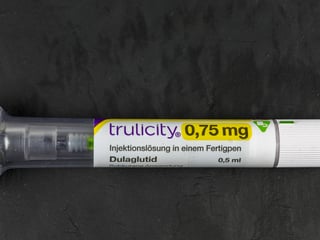
- Active ingredients
- Dulaglutide
- Manufacturer
- Eli Lilly
- Dosage forms
- pre-filled pen
- Category
- Diabetes Treatment
What is it?
Trulicity is the brand name for dulaglutide, a long-acting GLP-1 receptor agonist developed by Eli Lilly and approved in 2014 by the United States Food and Drug Administration. It is supplied as a single-use auto-injector pen designed to require minimal handling, with the needle hidden until activation. The product is intended for adult use under medical prescription and is not interchangeable with weight-management semaglutide brands.
Active ingredients
Each pen contains dulaglutide as the sole active ingredient at strengths of 0.75mg, 1.5mg, 3mg or 4.5mg per weekly injection. Dulaglutide is a recombinant peptide-Fc fusion protein in which two GLP-1 analogue peptides are linked to a modified human IgG4 Fc fragment, prolonging half-life and supporting weekly dosing.
Forms and dosages
Trulicity is administered once weekly by subcutaneous injection in the abdomen, thigh or upper arm. According to the prescribing information, treatment starts at 0.75mg per week with possible escalation to 1.5mg, 3mg or 4.5mg according to glycaemic response and tolerability. The injection day can be changed if at least three days have passed since the previous dose. Pens should be stored refrigerated before first use; after first use the pen can be kept at room temperature for the period defined in the leaflet.
Indications
The medication is indicated in adults with type 2 diabetes mellitus, alone or in combination with other antidiabetic agents, to improve glycaemic control. In several markets it also reduces the risk of major adverse cardiovascular events in adults with type 2 diabetes who have established cardiovascular disease or multiple risk factors. Trulicity is not indicated for type 1 diabetes, diabetic ketoacidosis or for cosmetic weight loss in people without a recognised indication.
How it works
After subcutaneous injection, dulaglutide is gradually absorbed and circulates with greater than 99% albumin binding. It binds the GLP-1 receptor in pancreatic beta cells, alpha cells, central nervous system and gut. Receptor activation enhances glucose-dependent insulin secretion, suppresses inappropriate glucagon release, slows gastric emptying and reduces appetite. The combined effect lowers fasting and post-prandial glucose without intrinsic hypoglycaemia risk and produces moderate weight reduction in many adults. Steady state is reached after about four weeks of weekly dosing.
Frequently asked questions
How is Trulicity different from Ozempic? ▾
Both are once-weekly GLP-1 receptor agonists used for type 2 diabetes, but they differ in molecular structure and pen design. Trulicity is a peptide-Fc fusion protein in a single-use auto-injector with a hidden needle, while Ozempic is a modified peptide bound to albumin in a multi-dose pen. Direct trials suggest semaglutide may produce somewhat greater HbA1c and weight reduction at high doses; tolerability is broadly similar. Choice between them is made by the prescriber.
How long does Trulicity take to work? ▾
Glycaemic effects begin within the first weeks of treatment and continue to improve as the dose is increased and steady state is reached, typically after four weeks of weekly dosing. According to the prescribing information, response should be reassessed by a clinician at regular intervals, with HbA1c, weight, tolerability and cardiovascular profile guiding further dose adjustments.
Can Trulicity be used in patients with kidney disease? ▾
Mild to moderate renal impairment does not require dose adjustment, but data in severe impairment are more limited and the prescribing information advises caution. Patients with severely reduced renal function may experience worse gastrointestinal tolerability that can lead to dehydration and a further drop in renal function. According to the prescribing information, hydration and renal monitoring are recommended in this population.
Does Trulicity require refrigeration? ▾
Yes. Unopened pens should be stored in a refrigerator between 2°C and 8°C. After first use or during travel, the pen can be kept at room temperature below 30°C for the period defined in the leaflet, after which it must be discarded. Freezing damages the product. Cold-chain integrity is one reason regulatory agencies caution against purchasing GLP-1 agonists from unverified online sources.
What are the main contraindications for Trulicity? ▾
Personal or family history of medullary thyroid carcinoma, multiple endocrine neoplasia type 2 and known hypersensitivity to dulaglutide are formal contraindications. Caution is required in patients with previous pancreatitis, severe gastroparesis or active gallbladder disease, and during pregnancy and breastfeeding. According to the prescribing information, the medical history and current medication list must be reviewed by a clinician before any prescription.
Related medications


Sources
This page is compiled from the official prescribing information for Dulaglutide. The links below open a search for that active ingredient in each register, so you always reach the current version of the label rather than a cached copy.
The information on this website is provided for reference and educational purposes only. It does not replace consultation with a qualified healthcare professional.