Symbicort (Budesonide/Formoterol) Inhaler
Symbicort is a prescription combination inhaler containing the inhaled corticosteroid budesonide and the long-acting beta-2 agonist formoterol. It is used in adults and adolescents for asthma maintenance and, in some markets, for COPD.
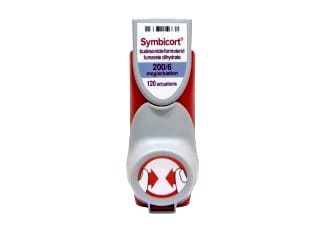
- Active ingredients
- Budesonide , Formoterol
- Manufacturer
- AstraZeneca
- Dosage forms
- dry powder inhaler , metered-dose inhaler
- Available dosages
- 80/4.5 mcg 160/4.5 mcg 200/6 mcg 400/12 mcg
- Category
- Respiratory Medications
What is it?
Symbicort is the brand name for the fixed-dose combination of budesonide and formoterol developed by AstraZeneca. It was first approved in Europe in 2000 and is supplied as a dry powder inhaler (Turbuhaler) and as a metered-dose inhaler depending on the market. Symbicort combines a corticosteroid that controls airway inflammation with a long-acting beta-2 agonist that has a relatively rapid onset of bronchodilation, supporting both maintenance and reliever roles in asthma.
Active ingredients
Each inhalation of Symbicort delivers fixed doses of budesonide (80, 160, 200 or 400 micrograms depending on the strength) and formoterol (4.5, 6 or 12 micrograms). Budesonide is an inhaled corticosteroid that suppresses chronic airway inflammation, while formoterol is a long-acting beta-2 agonist with rapid onset that produces bronchodilation.
Forms and dosages
Symbicort is administered by oral inhalation. According to the prescribing information, dosing depends on the indication and severity, and ranges from one inhalation twice daily to higher maintenance doses, with additional inhalations as needed in single-inhaler maintenance and reliever therapy (MART). The mouth should be rinsed with water and spat out after each use to reduce the risk of oral candidiasis.
Indications
Symbicort is approved in adults and adolescents from age 12 (younger in some markets) for the regular treatment of asthma when combination therapy of a long-acting beta-2 agonist and an inhaled corticosteroid is appropriate, and in some markets for symptom relief in COPD. According to international guidelines, Symbicort is also used as part of single-inhaler maintenance and reliever therapy, in which the same inhaler is used for both controller and reliever doses.
How it works
Budesonide reduces chronic airway inflammation through glucocorticoid receptor activation, decreasing inflammatory cell recruitment and cytokine release. Formoterol activates beta-2 receptors on airway smooth muscle, producing bronchodilation within minutes that lasts approximately twelve hours. Together, the combination addresses both inflammation and bronchospasm, with the rapid onset of formoterol enabling its use as a reliever in single-inhaler regimens.
Frequently asked questions
What is single-inhaler maintenance and reliever therapy with Symbicort? ▾
In single-inhaler maintenance and reliever therapy (sometimes called MART), Symbicort is used both as a daily controller and as needed for symptoms. The rapid onset of formoterol enables this dual role. According to international guidelines, this approach can reduce severe exacerbations in selected adults and adolescents with persistent asthma when the prescriber considers it appropriate, and is recommended over short-acting beta-2 agonist relief alone.
Can Symbicort be used as a rescue inhaler? ▾
When prescribed as part of single-inhaler maintenance and reliever therapy, Symbicort can be used both as a daily controller and as a reliever for acute symptoms, leveraging the fast onset of formoterol. Outside MART regimens, a separate short-acting beta-2 agonist is used for relief. According to the prescribing information, the regimen and the rescue strategy must be defined by the prescriber.
Why rinse the mouth after using Symbicort? ▾
Rinsing the mouth with water (and spitting it out) after each Symbicort dose reduces the deposition of budesonide on the oral mucosa and the risk of oral candidiasis (thrush) and dysphonia. Use of a spacer with the metered-dose inhaler also reduces oral deposition. According to the prescribing information, technique and post-inhalation rinsing should be reviewed at every relevant consultation.
Is Symbicort safe in COPD? ▾
Yes, in selected COPD patients. In some markets, Symbicort is approved for COPD when there is a history of exacerbations and significant symptoms despite long-acting bronchodilators. According to international COPD guidelines, inhaled corticosteroid combinations are generally reserved for patients with eosinophilic phenotype or repeated exacerbations, balancing benefit against the increased risk of pneumonia.
What are the main contraindications for Symbicort? ▾
Symbicort is contraindicated in known hypersensitivity to budesonide, formoterol or excipients. Caution is required in active untreated infection, severe cardiovascular disease, severe hepatic impairment, hypokalaemia and during pregnancy and breastfeeding. Long-acting beta-2 agonists must not be used as monotherapy in asthma, which is why they are supplied as combination inhalers. According to the prescribing information, the medical history must be reviewed by a clinician before prescription.
Related medications


Sources
This page is compiled from the official prescribing information for Budesonide, Formoterol. The links below open a search for that active ingredient in each register, so you always reach the current version of the label rather than a cached copy.
The information on this website is provided for reference and educational purposes only. It does not replace consultation with a qualified healthcare professional.