Singulair (Montelukast) Oral Tablets
Singulair is a prescription oral leukotriene receptor antagonist containing montelukast. It is used in adults and children for the maintenance treatment of asthma, exercise-induced bronchospasm and seasonal or perennial allergic rhinitis.
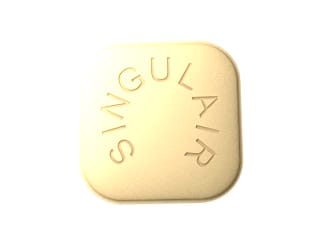
- Active ingredients
- Montelukast
- Manufacturer
- Organon
- Dosage forms
- tablet , chewable tablet , oral granules
- Category
- Respiratory Medications
What is it?
Singulair is the original brand name for montelukast, marketed by Organon (originally Merck). It was approved by the United States Food and Drug Administration in 1998 and is supplied as oral tablets, chewable tablets and oral granules to suit different age groups. Singulair is dispensed only on prescription. Several regulatory agencies have added a boxed warning about possible neuropsychiatric adverse events.
Active ingredients
Each tablet contains montelukast (as sodium) as the sole active ingredient at 4mg (chewable for younger children), 5mg (chewable for older children and adolescents) or 10mg (adults and adolescents). Montelukast is a selective antagonist of the cysteinyl leukotriene type 1 (CysLT1) receptor.
Forms and dosages
Singulair is administered orally once daily, typically in the evening. According to the prescribing information, the usual adult dose is 10mg once daily; paediatric dosing is age-based, with 4mg granules or chewable tablets for ages 6 months to 5 years and 5mg chewable tablets for ages 6 to 14 years. Tablets and granules can be taken with or without food and at the same time each day for consistency.
Indications
Singulair is approved in adults and children for the maintenance treatment of asthma, including exercise-induced bronchospasm, and for the treatment of seasonal and perennial allergic rhinitis when conventional therapy is insufficient or not tolerated. According to current guidelines, montelukast is not first-line for asthma maintenance in most adults, where inhaled corticosteroids are preferred, but is useful as add-on or in patients who cannot use inhalers correctly.
How it works
Montelukast selectively blocks the CysLT1 receptor, which mediates the action of leukotrienes C4, D4 and E4 — proinflammatory mediators released by mast cells and eosinophils. By blocking this receptor, montelukast reduces bronchoconstriction, mucosal oedema and airway inflammation. The drug does not affect histamine or beta-2 adrenergic pathways and is therefore complementary to antihistamines and beta-agonists.
Frequently asked questions
Is Singulair a rescue medication? ▾
No. Singulair is a maintenance medication, not a rescue medication. It does not produce immediate bronchodilation and is not a substitute for short-acting beta-2 agonists in acute asthma symptoms or exacerbations. According to the prescribing information, patients should always have access to an appropriate rescue inhaler and seek urgent care if asthma symptoms worsen suddenly.
What are the neuropsychiatric warnings about Singulair? ▾
Several regulatory agencies, including the FDA, have added warnings or boxed warnings about possible neuropsychiatric adverse events with Singulair, including agitation, anxiety, depression, sleep disturbances, abnormal dreams and rare reports of suicidal thoughts or behaviour. According to the prescribing information, the benefit-risk balance should be carefully discussed with the prescriber, particularly in allergic rhinitis where alternative treatments are available.
Can children take Singulair? ▾
Yes, in age- and weight-based dosing. Singulair is approved in children from age six months in some markets, with paediatric formulations such as chewable tablets and oral granules and a graduated dose schedule defined in the prescribing information. According to clinical guidelines, paediatric prescribing should be discussed with a paediatrician, especially given the neuropsychiatric warnings and the availability of inhaled alternatives.
How is Singulair different from antihistamines in allergic rhinitis? ▾
Antihistamines block histamine at the H1 receptor, while Singulair blocks the CysLT1 receptor for leukotrienes — a complementary inflammatory pathway. In allergic rhinitis, montelukast can be effective when antihistamines and intranasal corticosteroids are insufficient or not tolerated, and the two classes can be combined under medical supervision. According to international guidelines, Singulair is generally not first-line for isolated allergic rhinitis.
What are the main contraindications for Singulair? ▾
Singulair is contraindicated in known hypersensitivity to montelukast or its excipients. Caution is required in significant hepatic impairment, in patients with a history of psychiatric disorders or suicidal ideation given the boxed warnings, and during pregnancy and breastfeeding. According to the prescribing information, the medical history must be reviewed by a clinician before any prescription, with attention to mental health background.
Related medications


Sources
This page is compiled from the official prescribing information for Montelukast. The links below open a search for that active ingredient in each register, so you always reach the current version of the label rather than a cached copy.
The information on this website is provided for reference and educational purposes only. It does not replace consultation with a qualified healthcare professional.