Provera (Medroxyprogesterone Acetate)
Provera is the brand of oral medroxyprogesterone acetate (MPA), a synthetic progestin used for menstrual cycle disorders, prevention of endometrial hyperplasia in HRT and other gynaecological indications. Authorised generic MPA is widely available; depot injectable MPA is marketed as Depo-Provera.
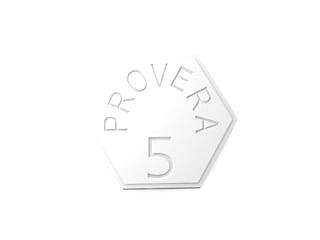
- Active ingredients
- Medroxyprogesterone
- Manufacturer
- Pfizer
- Dosage forms
- tablet
- Category
- Women's Sexual Health
What is it?
Provera is the brand name under which Pfizer (originally Upjohn) markets oral medroxyprogesterone acetate (MPA) tablets in the United States, with parallel global availability through authorised generics. MPA has been in clinical use since 1959 and is on the WHO Essential Medicines List. Depo-Provera (intramuscular and subcutaneous depot injection) is the long-acting contraceptive form of the same active ingredient. Authorised generic medroxyprogesterone is widely available across both routes.
Active ingredients
Each Provera tablet contains 2.5mg, 5mg or 10mg of medroxyprogesterone acetate. The active substance is identical between branded Provera and authorised generic medroxyprogesterone tablets, with bioequivalence required by the regulator. MPA has weak androgenic and corticosteroid activity but minimal estrogenic effect, distinguishing it from natural progesterone.
Forms and dosages
Provera is supplied as oral tablets in 2.5, 5 and 10mg strengths. For HRT alongside estrogen, typical dosing is 2.5–5mg daily continuous or 5–10mg daily for 12–14 days each month (cyclic). For abnormal uterine bleeding, 5–10mg daily for 5–10 days. For secondary amenorrhoea, 5–10mg daily for 5–10 days. Take at the same time each day; food does not significantly affect absorption.
Indications
Provera is approved for amenorrhoea, abnormal uterine bleeding due to hormonal imbalance, and prevention of endometrial hyperplasia in postmenopausal women receiving estrogen. According to current menopause guidelines, micronised progesterone is now generally preferred over MPA for HRT because of evidence suggesting lower breast cancer and cardiovascular risk, but Provera remains widely used and is an effective alternative.
How it works
Medroxyprogesterone acetate binds progesterone receptors and produces strong progestational effects: thickening cervical mucus, inhibiting ovulation, thinning the endometrium and reducing endometrial proliferation in HRT. Its weak androgenic and corticosteroid activity is distinct from bioidentical progesterone. In HRT, MPA opposes estrogen-driven endometrial proliferation, preventing hyperplasia and endometrial cancer in women with an intact uterus receiving estrogen. Therapeutic effect is established within days of starting therapy.
Frequently asked questions
Why is Provera less commonly used in HRT now? ▾
The Women's Health Initiative trial in 2002 found that combined HRT containing oral conjugated estrogens plus MPA was associated with a small increase in breast cancer, stroke and venous thromboembolism. Since then, observational data have suggested better outcomes with bioidentical micronised progesterone, which has shifted prescribing patterns. According to current menopause guidelines, micronised progesterone is the preferred progestogen when available, with Provera remaining an option.
Is Provera a contraceptive? ▾
Oral Provera at typical HRT or AUB doses is not a reliable contraceptive. The depot injectable form (Depo-Provera) at 150mg every 12 weeks is highly effective contraception. According to the prescribing information, women relying on contraception should use either Depo-Provera or another approved contraceptive method, not oral Provera.
How quickly does Provera work for amenorrhoea or AUB? ▾
For amenorrhoea or abnormal uterine bleeding, Provera typically produces a withdrawal bleed within 3–7 days of completing a 5–10 day course. The bleed represents shedding of the progestin-prepared endometrium and is normal. According to clinical practice, repeated cycles may be prescribed when underlying hormonal imbalance persists.
Is Provera the same as natural progesterone? ▾
No — Provera is medroxyprogesterone acetate, a synthetic progestin with progesterone-like activity but different pharmacology, including weak androgenic and corticosteroid effects. Bioidentical natural progesterone (Prometrium, Utrogestan) is structurally identical to endogenous hormone and has a different metabolic profile. According to current menopause guidelines, micronised progesterone is generally preferred for bioidentical HRT.
Is Provera the same as generic medroxyprogesterone? ▾
Yes — Provera and authorised generic medroxyprogesterone tablets contain the same active ingredient at the same strengths and have demonstrated bioequivalence. The generic is significantly cheaper and clinically equivalent in nearly all cases. Most current prescribing is on the generic; the Provera brand survives mainly in the United States.
Related medications


Sources
This page is compiled from the official prescribing information for Medroxyprogesterone. The links below open a search for that active ingredient in each register, so you always reach the current version of the label rather than a cached copy.
The information on this website is provided for reference and educational purposes only. It does not replace consultation with a qualified healthcare professional.