Propecia (Finasteride 1mg)
Propecia is the original brand of finasteride 1mg, manufactured by Merck for the treatment of male pattern hair loss in men aged 18 to 41. Reduces DHT to slow or partially reverse androgen-driven follicle miniaturisation.
- Active ingredients
- Finasteride
- Manufacturer
- Merck
- Dosage forms
- tablet
- Available dosages
- 1mg
- Category
- Male and Female Pattern Hair Loss
What is it?
Propecia is the original brand name for finasteride 1mg, an oral medication approved in 1997 for the treatment of male pattern hair loss in men aged 18 to 41 years. It is manufactured by Merck and is the first oral treatment specifically approved for androgenetic alopecia. The same molecule is marketed at 5mg under the brand name Proscar for benign prostatic hyperplasia. Authorised generic finasteride 1mg has been available in most regulated markets since the early 2010s, offering a lower-cost alternative.
Active ingredients
Each Propecia tablet contains 1mg of finasteride, a selective inhibitor of 5-alpha-reductase type II. This enzyme converts testosterone to dihydrotestosterone (DHT) — the androgen that drives miniaturisation of scalp hair follicles in genetically susceptible men. By blocking this conversion, finasteride reduces serum and scalp DHT concentrations by approximately 65-70% at the 1mg dose, allowing some follicles to recover and slowing further loss.
Forms and dosages
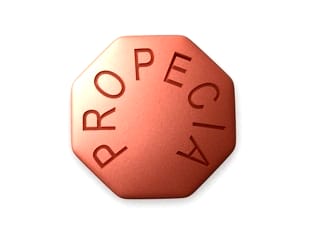
Propecia is supplied as octagonal, brown, film-coated tablets containing 1mg of finasteride. The recommended dose is one tablet daily, taken at the same time each day with or without food. According to the prescribing information, treatment must be continuous to maintain effect — discontinuation typically leads to gradual return of hair loss within 6 to 12 months. There is no benefit from doses higher than 1mg for hair loss; 5mg is the BPH dose, not a stronger hair loss option.
Indications
Propecia is approved for the treatment of male pattern hair loss (androgenetic alopecia) in men aged 18 to 41. It is not approved for women, paediatric patients, or men outside this age range. According to clinical guidelines, treatment is most effective in early-to-moderate stages of hair loss and works better at the crown than at the frontal hairline. Established baldness with no remaining viable follicles will not respond to medication alone.
How it works
DHT, produced from testosterone by 5-alpha-reductase, drives miniaturisation of scalp hair follicles in genetically susceptible men, gradually shortening anagen growth phases until follicles produce only fine vellus hairs. Finasteride blocks this process by inhibiting 5-alpha-reductase type II, reducing scalp DHT exposure. With sustained treatment, miniaturised but still viable follicles can produce thicker hairs again, and progression of loss slows. According to clinical trials, visible improvement appears at 3-6 months and is fully evaluated at 12 months.
Frequently asked questions
How long until Propecia works? ▾
Visible improvement typically appears after 3 to 6 months of consistent daily use, with full effect usually evaluated at 12 months. According to clinical trials, approximately 30-65% of men experience visible regrowth and another 30-50% experience stabilisation rather than regrowth. Initial shedding during the first weeks is normal and reflects synchronisation of hair cycle phases, not worsening of the condition. Treatment must be continuous to maintain results.
What happens if I stop taking Propecia? ▾
Discontinuing Propecia leads to gradual loss of treatment-related hair growth and a return to the natural progression of pattern hair loss, typically over 6 to 12 months. According to clinical guidelines, the medication is intended for long-term use; the underlying genetic susceptibility to hair loss does not change while on treatment. Some patients report persistent sexual side effects after discontinuation (post-finasteride syndrome), although causation remains debated.
Are sexual side effects common? ▾
In clinical trials, sexual side effects (decreased libido, erectile dysfunction, ejaculation disorders) were reported in approximately 1-3% of men taking finasteride 1mg, slightly above placebo rates. Most cases resolve with continued use or after stopping the medication. According to the prescribing information, men experiencing persistent sexual symptoms should report them to the prescribing physician. The reported risk should be balanced against the prospective benefits of treatment.
Is Propecia better than generic finasteride 1mg? ▾
Propecia and authorised generic finasteride 1mg contain the same active ingredient at the same strength and meet the same regulatory bioequivalence requirements. The clinical effect should therefore be comparable. Differences include manufacturer (Merck for Propecia, various for generics), excipients, tablet appearance and price. According to clinical guidelines, an authorised generic is an acceptable substitute for Propecia. Some patients have personal preferences but no consistent clinical advantage of the brand has been demonstrated.
Can Propecia be combined with minoxidil? ▾
Yes. Combining oral finasteride and topical minoxidil is a recognised first-line strategy for moderate-to-severe pattern hair loss, with several studies suggesting combination therapy outperforms either treatment alone. The two work through different mechanisms (DHT reduction versus vasodilation/follicle stimulation) and the side effect profiles do not significantly overlap. According to clinical guidelines, combination therapy should be considered when monotherapy provides insufficient response.
Related medications


Sources
This page is compiled from the official prescribing information for Finasteride. The links below open a search for that active ingredient in each register, so you always reach the current version of the label rather than a cached copy.
The information on this website is provided for reference and educational purposes only. It does not replace consultation with a qualified healthcare professional.