Prilosec (Omeprazole) Capsules for Acid Reflux
Prilosec is an oral proton pump inhibitor containing omeprazole, the prototypical PPI. It is used in adults and children for gastro-oesophageal reflux disease, peptic ulcer disease, NSAID-induced ulcer prophylaxis and Helicobacter pylori eradication.
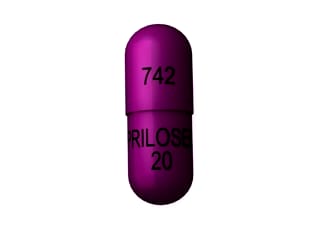
- Active ingredients
- Omeprazole
- Manufacturer
- AstraZeneca / P&G
- Dosage forms
- delayed-release capsule , delayed-release tablet , oral suspension
- Category
- Gastrointestinal Medications
What is it?
Prilosec is one of the best-known brands of omeprazole, originally marketed by AstraZeneca and now also distributed by Procter & Gamble for over-the-counter formulations in the United States. Omeprazole was the first proton pump inhibitor approved for clinical use, in 1989. Multiple authorised generics are widely available, and the molecule is part of the World Health Organization List of Essential Medicines.
Active ingredients
Each capsule contains omeprazole as the sole active ingredient at 10mg, 20mg or 40mg. Omeprazole is a substituted benzimidazole prodrug. It is a racemic mixture of R and S enantiomers, with the S-enantiomer (esomeprazole) marketed separately as Nexium.
Forms and dosages
Prilosec is administered orally once daily, ideally 30-60 minutes before a meal. According to the prescribing information, the usual adult dose is 20mg once daily for GORD or peptic ulcer healing, with higher doses for severe disease or H. pylori eradication regimens. Capsules should be swallowed whole with water or opened and the granules sprinkled on soft food in patients with swallowing difficulties.
Indications
Prilosec is approved in adults and children for the treatment of gastro-oesophageal reflux disease, including erosive oesophagitis healing, peptic ulcer disease, prevention of NSAID-induced ulcers, Zollinger-Ellison syndrome and as part of triple-therapy regimens for Helicobacter pylori eradication. According to clinical guidelines, the lowest effective dose for the shortest necessary duration should be used, with periodic reassessment of long-term therapy.
How it works
Omeprazole is a substituted benzimidazole prodrug activated in the acidic environment of the gastric parietal cell, where it irreversibly inhibits the H+/K+-ATPase enzyme — the proton pump responsible for the final step in gastric acid secretion. Acid secretion gradually returns after discontinuation as new pumps are synthesised.
Frequently asked questions
How is Prilosec different from Nexium? ▾
Prilosec contains racemic omeprazole (R and S enantiomers), while Nexium contains only the S-enantiomer (esomeprazole). The S form has more consistent metabolism with higher bioavailability after multiple doses, particularly in CYP2C19 extensive metabolisers. Clinical efficacy is broadly comparable at equivalent doses, although Nexium may produce slightly faster healing in erosive oesophagitis. Choice between the two is made by the prescriber.
When should Prilosec be taken? ▾
Prilosec is most effective when taken approximately 30 to 60 minutes before a meal, ideally before breakfast, because the proton pumps are most active during meals. According to the prescribing information, capsules should be swallowed whole with water, although they can be opened and the granules sprinkled on soft food in patients with swallowing difficulties. The granules must not be crushed or chewed.
Why does Prilosec reduce the effect of clopidogrel? ▾
Omeprazole is a strong inhibitor of CYP2C19, the enzyme that activates the antiplatelet prodrug clopidogrel to its active metabolite. Pharmacokinetic studies show reduced active metabolite concentrations and antiplatelet effect when these two drugs are co-administered. According to the prescribing information and several regulatory communications, the combination should be avoided when possible; alternative proton pump inhibitors such as pantoprazole are preferred in patients on clopidogrel.
Can Prilosec be taken long-term? ▾
Prilosec is commonly used for prolonged periods in chronic GORD, Barrett's oesophagus and peptic ulcer prophylaxis with NSAIDs. Long-term use has been associated with potential reductions in vitamin B12 and magnesium absorption, an increased risk of bone fractures and possible enteric infections. According to international guidelines, long-term proton pump inhibitor therapy should be regularly reassessed, with the lowest effective dose used.
What are the main contraindications for Prilosec? ▾
Prilosec is contraindicated in known hypersensitivity to omeprazole or substituted benzimidazoles, and in concurrent use with rilpivirine. Caution is required in severe hepatic impairment, in concurrent clopidogrel therapy, in long-term use with monitoring of magnesium and bone density and during pregnancy and breastfeeding. According to the prescribing information, the medical history must be reviewed by a clinician before any prescription.
Related medications


Sources
This page is compiled from the official prescribing information for Omeprazole. The links below open a search for that active ingredient in each register, so you always reach the current version of the label rather than a cached copy.
The information on this website is provided for reference and educational purposes only. It does not replace consultation with a qualified healthcare professional.