Pepcid (Famotidine) Tablets for Heartburn and Reflux
Pepcid is an oral H2-receptor antagonist containing famotidine. It is used in adults and children for heartburn, gastro-oesophageal reflux, peptic ulcer disease and Zollinger-Ellison syndrome, with a favourable safety profile and minimal drug interactions.
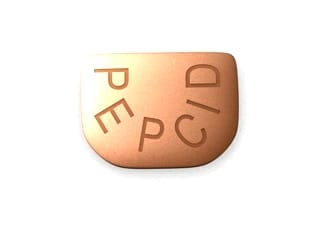
- Active ingredients
- Famotidine
- Manufacturer
- Johnson & Johnson
- Dosage forms
- tablet , orally disintegrating tablet , oral suspension
- Category
- Gastrointestinal Medications
What is it?
Pepcid is one of the original brands of famotidine, marketed by Johnson & Johnson and originally developed by Merck in the 1980s. It is supplied as oral tablets, orally disintegrating tablets, oral suspension, chewable tablets and parenteral solution. Pepcid is dispensed both with and without prescription depending on dose and country. It is the main remaining H2-blocker after the withdrawal of ranitidine because of nitrosamine concerns.
Active ingredients
Each tablet contains famotidine as the sole active ingredient at 10mg, 20mg or 40mg. Famotidine is a thiazole derivative H2-receptor antagonist that blocks histamine-stimulated gastric acid secretion at the parietal cell.
Forms and dosages
Pepcid is administered orally once or twice daily, with or without food. According to the prescribing information, the usual adult dose for heartburn is 10mg or 20mg taken before meals or symptoms (over the counter) and 20-40mg twice daily for peptic ulcer or GORD (with prescription). Higher doses up to 160mg every 6 hours are used in Zollinger-Ellison syndrome. Substantial dose reduction is required in renal impairment.
Indications
Pepcid is approved in adults and children for short-term treatment of active duodenal and gastric ulcer, maintenance therapy of duodenal ulcer, gastro-oesophageal reflux disease, Zollinger-Ellison syndrome and other hypersecretory conditions. It is also used for occasional heartburn and dyspepsia in over-the-counter formulations. According to clinical guidelines, proton pump inhibitors are generally preferred for chronic GORD, while Pepcid remains useful for episodic symptoms.
How it works
Famotidine reversibly and competitively blocks histamine H2 receptors on gastric parietal cells, reducing both basal and stimulated gastric acid secretion. The effect is most pronounced on histamine-mediated secretion. Famotidine does not significantly affect H1 or other histamine receptor subtypes and does not have anticholinergic or antiandrogenic effects, distinguishing it from cimetidine.
Frequently asked questions
How is Pepcid different from Prilosec or Nexium? ▾
Pepcid is an H2-receptor antagonist that reversibly blocks histamine-stimulated gastric acid secretion with rapid onset and modest acid suppression. Prilosec and Nexium are proton pump inhibitors that irreversibly inhibit the acid pump itself, with deeper and more durable acid suppression. According to clinical guidelines, proton pump inhibitors are generally preferred for chronic GORD and erosive disease, while Pepcid remains useful for occasional symptoms or as add-on therapy.
Why was ranitidine withdrawn while Pepcid remained? ▾
Ranitidine, another H2-receptor antagonist, was withdrawn from many markets in 2019 to 2020 because of detection of N-nitrosodimethylamine (NDMA) impurities in some formulations and concerns about formation over time. Famotidine has a different chemical structure and has not shown the same nitrosamine concerns, so Pepcid remains widely available. According to regulatory communications, famotidine is now the predominant H2-blocker in many countries.
Can Pepcid be used long-term? ▾
Pepcid can be used for prolonged periods when needed, although chronic GORD is more often managed with proton pump inhibitors. According to the prescribing information, long-term use is generally well tolerated, with periodic reassessment by the prescriber. Tachyphylaxis (reduced effect over time) is possible with chronic use, which sometimes prompts reassessment of the regimen and consideration of a proton pump inhibitor.
Is Pepcid safe in older adults? ▾
Pepcid is generally well tolerated in older adults, but renal function should be considered because famotidine is excreted predominantly unchanged in urine. According to the prescribing information, dose reduction or extended dosing intervals are recommended in moderate to severe renal impairment, including in many elderly patients. Confusion has been reported in older patients with reduced renal clearance and should be monitored.
What are the main contraindications for Pepcid? ▾
Pepcid is contraindicated in known hypersensitivity to famotidine or other H2-receptor antagonists. Caution is required in renal impairment (with dose adjustment), in older adults, and during pregnancy and breastfeeding. According to the prescribing information, the medical history must be reviewed by a clinician before any prescription, particularly in patients with chronic kidney disease or on multiple medications.
Related medications


Sources
This page is compiled from the official prescribing information for Famotidine. The links below open a search for that active ingredient in each register, so you always reach the current version of the label rather than a cached copy.
The information on this website is provided for reference and educational purposes only. It does not replace consultation with a qualified healthcare professional.