Coumadin (Warfarin) Oral Tablets
Coumadin is a prescription oral anticoagulant containing warfarin. It is used in adults for the prevention and treatment of venous thromboembolism, atrial fibrillation thromboembolism and selected mechanical heart valves. It requires regular INR monitoring.
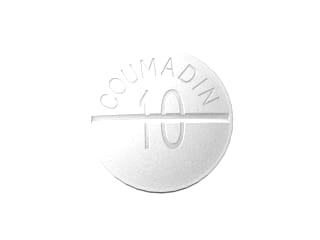
- Active ingredients
- Warfarin
- Manufacturer
- Bristol-Myers Squibb
- Dosage forms
- tablet
- Category
- Cardiovascular Medications
What is it?
Coumadin is the original brand name for warfarin, marketed by Bristol-Myers Squibb. It has been in clinical use since the 1950s and is supplied as oral tablets at multiple strengths to allow precise individual dose adjustment. Coumadin is dispensed only on prescription. Despite the introduction of direct oral anticoagulants, warfarin remains essential in selected indications such as mechanical heart valves and severe renal impairment.
Active ingredients
Each tablet contains warfarin sodium as the sole active ingredient at strengths from 1mg to 10mg. Warfarin is a coumarin-type vitamin K antagonist that interferes with the synthesis of clotting factors II, VII, IX and X and proteins C and S in the liver.
Forms and dosages
Coumadin is administered orally once daily at a consistent time. According to the prescribing information, the dose is highly individualised, ranging from less than 1mg to more than 10mg per day, and is determined by international normalised ratio (INR) monitoring. Initial dosing is typically 5mg to 10mg per day for several days, then adjusted based on INR. The therapeutic INR range depends on the indication, typically 2 to 3 in atrial fibrillation and 2.5 to 3.5 in mechanical heart valves.
Indications
Coumadin is approved in adults for the prevention and treatment of venous thromboembolism, including deep vein thrombosis and pulmonary embolism, for the prevention of thromboembolic events in atrial fibrillation, for selected mechanical heart valves and after some cardiac procedures. According to international guidelines, direct oral anticoagulants are now preferred in non-valvular atrial fibrillation in many patients, but Coumadin retains a defined role in valvular and severe renal disease.
How it works
Warfarin inhibits vitamin K epoxide reductase complex 1 (VKORC1), the enzyme responsible for regenerating reduced vitamin K, a cofactor for the gamma-carboxylation of clotting factors. The result is the synthesis of partially functional clotting factors with reduced procoagulant activity. The clinical anticoagulant effect develops gradually over several days because circulating active factors must be cleared first.
Frequently asked questions
Why does Coumadin require INR monitoring? ▾
Coumadin has a narrow therapeutic window and high inter-individual variability in dose requirements due to genetics, diet, comorbidity and concomitant medications. The international normalised ratio (INR) is used to keep anticoagulation within a defined therapeutic range. According to the prescribing information, regular monitoring and dose adjustment by a qualified clinician are essential to limit the risk of bleeding and thrombosis.
Should green vegetables be avoided with Coumadin? ▾
Vitamin K, abundant in green leafy vegetables, antagonises Coumadin's effect, and a sudden change in vitamin K intake can destabilise the INR. According to international guidelines, patients on Coumadin should aim for a consistent vitamin K intake rather than complete avoidance. Significant changes in diet, including starting or stopping a green-vegetable-rich plan, should be discussed with the prescriber and accompanied by INR re-checks.
How is Coumadin different from direct oral anticoagulants? ▾
Coumadin acts indirectly by reducing the synthesis of multiple clotting factors and requires regular INR monitoring. Direct oral anticoagulants (DOACs) inhibit a single clotting factor (Xa or thrombin) without routine monitoring and have fewer dietary interactions. According to international guidelines, DOACs are preferred in non-valvular atrial fibrillation for many patients, while Coumadin remains essential for mechanical valves and in some severe renal impairment scenarios.
What should be done in case of bleeding while on Coumadin? ▾
Minor bleeding such as epistaxis or small bruises rarely requires immediate intervention but should be reported to the prescriber. Major bleeding requires urgent medical assessment; depending on severity and INR, treatment may include vitamin K, fresh frozen plasma or prothrombin complex concentrate. According to international guidelines, all patients on Coumadin should be given written information on bleeding signs and emergency contacts.
What are the main contraindications for Coumadin? ▾
Coumadin is contraindicated in known hypersensitivity, in active major bleeding, in severe uncontrolled hypertension, in haemorrhagic stroke without resolution, in advanced kidney or liver failure with coagulopathy, and during pregnancy except in selected mechanical valve scenarios. Caution is required in falls risk, alcohol misuse and uncertain compliance with monitoring. According to the prescribing information, the medical history must be reviewed by a clinician before any prescription.
Related medications


Sources
This page is compiled from the official prescribing information for Warfarin. The links below open a search for that active ingredient in each register, so you always reach the current version of the label rather than a cached copy.
The information on this website is provided for reference and educational purposes only. It does not replace consultation with a qualified healthcare professional.