Aygestin (Norethindrone Acetate)
Aygestin is the brand of high-dose norethindrone acetate (5mg) used for non-contraceptive gynaecological indications including endometriosis-related pain, abnormal uterine bleeding and secondary amenorrhoea. Authorised generic norethindrone acetate is widely available at lower cost.
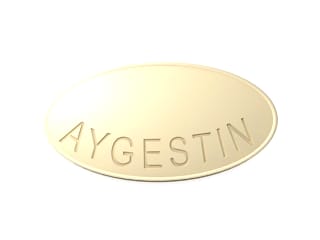
- Active ingredients
- Norethindrone
- Manufacturer
- Various generics
- Dosage forms
- tablet
- Available dosages
- 5mg
- Category
- Women's Sexual Health
What is it?
Aygestin is the brand name under which norethindrone acetate 5mg tablets are marketed in the United States for gynaecological indications. Norethindrone is one of the oldest synthetic progestins, in clinical use since 1957 and on the WHO Essential Medicines List. Lower-dose norethindrone tablets (0.35mg) are used as the progestin-only contraceptive 'mini-pill' (Camila, Errin, Nor-QD); the 5mg Aygestin tablet is reserved for endometriosis pain, abnormal uterine bleeding and amenorrhoea. Authorised generic norethindrone acetate dominates current prescribing.
Active ingredients
Each Aygestin tablet contains 5mg of norethindrone acetate, a more bioavailable acetate ester of norethindrone. The active substance is identical between branded Aygestin and authorised generic norethindrone acetate tablets, with bioequivalence required by the regulator. The acetate ester improves oral bioavailability compared with plain norethindrone, which is why the contraceptive 'mini-pill' uses the lower 0.35mg unmodified dose while gynaecological indications use the 5mg acetate.
Forms and dosages
Aygestin is supplied as 5mg oral tablets. For endometriosis, typical dosing is 5mg daily for 2 weeks, increased by 2.5mg/day every 2 weeks to a maximum of 15mg/day, continued for 6–9 months. For abnormal uterine bleeding, 2.5–10mg daily for 5–10 days. For secondary amenorrhoea, 2.5–10mg daily for 5–10 days. Take at the same time each day; food does not significantly affect absorption.
Indications
Aygestin is approved for endometriosis-associated pain, abnormal uterine bleeding due to hormonal imbalance, and secondary amenorrhoea. According to current gynaecology guidelines, high-dose norethindrone is one of several first-line medical options for endometriosis pain, alongside combined hormonal contraceptives and other progestins. It is not a contraceptive at this dose despite the underlying progestin activity — the prescribing information specifies that contraception is not assured with Aygestin alone.
How it works
Norethindrone binds to progesterone receptors and exerts progestational effects: thickening cervical mucus, suppressing the LH surge, thinning the endometrium and reducing endometrial implant activity in endometriosis. It also has weak androgenic activity that distinguishes it from newer progestins. At 5mg daily, the high-dose progestin effect suppresses endometrial proliferation effectively, which is why Aygestin is used for endometriosis and abnormal uterine bleeding rather than as contraception.
Frequently asked questions
Is Aygestin a form of birth control? ▾
No — Aygestin (norethindrone acetate 5mg) is approved for endometriosis pain, abnormal uterine bleeding and amenorrhoea, not for contraception. Although it contains a progestin and produces progestational effects, the prescribing information specifies that contraception is not assured. The progestin-only 'mini-pill' contains a much lower dose (0.35mg) of unmodified norethindrone.
How long can Aygestin be taken for endometriosis? ▾
For endometriosis, typical use is 6–9 months continuous, with the dose titrated up over weeks. Longer use is possible based on symptom control, side effects and the prescriber's judgement. According to current gynaecology guidelines, high-dose norethindrone is one of several effective long-term medical options for endometriosis pain, alongside combined hormonal contraceptives and GnRH agonists.
What side effects are common with Aygestin? ▾
Common adverse effects include irregular bleeding or spotting, breast tenderness, nausea, mood changes, headache, fluid retention and weight changes. Compared with newer progestins, norethindrone has more androgenic activity, which may cause acne or oily skin in some women. According to clinical practice, side effects often improve over the first few months as the body adjusts.
Is Aygestin the same as the 'mini-pill' for contraception? ▾
No — Aygestin is 5mg norethindrone acetate for gynaecological indications; the mini-pill is 0.35mg unmodified norethindrone for contraception. The dose, formulation and indications are different, and they should not be substituted for each other. According to the prescribing information, the 5mg dose is too high for routine contraceptive use and the 0.35mg dose is too low for effective endometriosis or AUB management.
Is Aygestin the same as generic norethindrone acetate? ▾
Yes — Aygestin and authorised generic norethindrone acetate tablets contain the same active ingredient at the same strength and have demonstrated bioequivalence. The generic is significantly cheaper and clinically equivalent in nearly all cases. Most current prescribing in the US is on the generic; the Aygestin brand remains a recognisable name in gynaecology.
Related medications


Sources
This page is compiled from the official prescribing information for Norethindrone. The links below open a search for that active ingredient in each register, so you always reach the current version of the label rather than a cached copy.
The information on this website is provided for reference and educational purposes only. It does not replace consultation with a qualified healthcare professional.