Xalatan (Latanoprost) Eye Drops for Glaucoma
Xalatan is an ophthalmic prostaglandin F2-alpha analogue containing latanoprost. It is used in adults and children for ocular hypertension and chronic open-angle glaucoma, with once-daily evening dosing and significant intraocular pressure reduction.
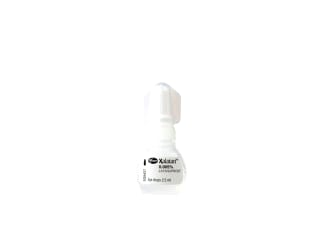
- Active ingredients
- Latanoprost
- Manufacturer
- Pfizer
- Dosage forms
- ophthalmic solution
- Available dosages
- 0.005%
- Category
- Eye Care and Ophthalmic Treatments
What is it?
Xalatan is the original brand of latanoprost ophthalmic solution, marketed by Pfizer (originally Pharmacia). It was the first prostaglandin analogue approved for clinical use in glaucoma, in 1996, and is supplied as a 0.005% ophthalmic solution. Xalatan is dispensed only on prescription. Multiple authorised generics of latanoprost ophthalmic solution are now widely available, and the molecule is part of the World Health Organization List of Essential Medicines.
Active ingredients
Each milliliter of Xalatan ophthalmic solution contains latanoprost as the sole active ingredient at 0.05mg (0.005%). Latanoprost is a prodrug ester of prostaglandin F2-alpha, hydrolysed by corneal esterases to its active free acid that binds the FP prostaglandin receptor.
Forms and dosages
Xalatan is administered as one drop in the affected eye(s) once daily, ideally in the evening. According to the prescribing information, more frequent dosing reduces rather than enhances the pressure-lowering effect. Multiple ophthalmic medications should be separated by at least 5 minutes. Sealed bottles are typically stored refrigerated until first opening, then at room temperature for the duration of use.
Indications
Xalatan is approved in adults and children for the reduction of elevated intraocular pressure in patients with chronic open-angle glaucoma or ocular hypertension. According to international guidelines, prostaglandin analogues such as latanoprost are typically first-line therapy for newly diagnosed glaucoma because of their efficacy, once-daily dosing and favourable systemic safety profile. Combination with other agents is considered when the target intraocular pressure is not achieved with monotherapy.
How it works
Latanoprost is a prodrug ester hydrolysed by corneal esterases to its active free acid, which selectively binds the prostaglandin F (FP) receptor. Activation of FP receptors on uveoscleral tissue increases the outflow of aqueous humour through this non-trabecular pathway, lowering intraocular pressure. The intraocular pressure-lowering effect begins within 3 to 4 hours, peaks at 8 to 12 hours and persists for at least 24 hours.
Frequently asked questions
How is Xalatan different from Lumigan? ▾
Both are prostaglandin-class glaucoma agents. Xalatan contains latanoprost (a true prostaglandin F2-alpha analogue), while Lumigan contains bimatoprost (a prostamide analogue). Clinical efficacy is broadly comparable, with bimatoprost producing slightly greater pressure reduction in some studies but more pronounced conjunctival hyperaemia. According to international guidelines, the choice depends on individual response and tolerability, with the prescriber making the final decision.
When should Xalatan be applied? ▾
Xalatan is applied as one drop in the affected eye(s) once daily, ideally in the evening. According to the prescribing information, this timing aligns with diurnal variation of intraocular pressure and produces optimal pressure control. More frequent dosing reduces rather than enhances the pressure-lowering effect. If a dose is missed, the next dose should be applied at the usual time without doubling.
Why does Xalatan cause iris colour changes? ▾
Prostaglandin analogues stimulate melanogenesis in iris melanocytes, leading to gradual increases in brown pigmentation. The change is most noticeable in patients with mixed-colour irises (blue-brown, green-brown, hazel) and is permanent. According to the prescribing information, patients should be informed of this possibility before initiating therapy. The cosmetic change does not affect ocular function or glaucoma control.
How should Xalatan be stored? ▾
Sealed bottles of Xalatan are typically stored refrigerated (2-8°C) until first opening, then at room temperature (up to 25°C) for the duration of use, which is usually up to 4 weeks after first opening. Storage requirements may vary by country and brand. According to the prescribing information for each product, storage instructions should be followed to maintain potency. Discard any solution that is discoloured or shows particulate matter.
What are the main contraindications for Xalatan? ▾
Xalatan is contraindicated in known hypersensitivity to latanoprost or its excipients. Caution is required in active intraocular inflammation, in aphakic or pseudophakic patients with disrupted posterior lens capsule (risk of macular oedema), in herpes simplex keratitis history and in pregnancy and breastfeeding. According to the prescribing information, the medical history must be reviewed by a clinician before any prescription, particularly in patients with a history of uveitis.
Related medications

Sources
This page is compiled from the official prescribing information for Latanoprost. The links below open a search for that active ingredient in each register, so you always reach the current version of the label rather than a cached copy.
The information on this website is provided for reference and educational purposes only. It does not replace consultation with a qualified healthcare professional.