Coumadin vs Spironolactone: side-by-side comparison

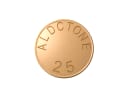
Coumadin (Herz-Kreislauf-Medikamente) and Spironolactone (Diuretika) belong to different therapeutic classes and are rarely interchangeable. This page compares the medications' purposes, mechanisms and the situations where each is used.
| Property | Coumadin | Spironolactone |
|---|---|---|
| Active ingredient | Warfarin | Spironolactone |
| Manufacturer | Bristol-Myers Squibb | Various generics |
| Class | Herz-Kreislauf-Medikamente | Diuretika |
| Strengths | 1mg, 2mg, 2.5mg, 3mg, 4mg, 5mg, 6mg, 7.5mg, 10mg | 25mg, 50mg, 100mg |
| Forms | tablet | tablet |
What's the same
Coumadin and Spironolactone are used in very different patients, and the points in common are limited. The main shared element is that both meet regulatory standards for efficacy and safety and benefit from pharmacist oversight.
Key differences
Coumadin belongs to Herz-Kreislauf-Medikamente while Spironolactone belongs to Diuretika. Indications, mechanisms and target populations differ. The comparison is most useful when a clinician has mentioned both medications and the patient wants to understand where each fits.
Mechanism and action
Coumadin: Warfarin hemmt den Vitamin-K-Epoxid-Reduktase-Komplex 1 (VKORC1), das Enzym, das für die Regeneration des reduzierten Vitamin K verantwortlich ist, eines Cofaktors für die Gamma-Carboxylierung der Gerinnungsfaktoren. Spironolactone: Spironolacton blockiert den Aldosteron-(Mineralokortikoid-)Rezeptor im distalen Tubulus kompetitiv und reduziert dadurch die Natriumrückresorption und die Kaliumausscheidung.
When Coumadin is preferred
Coumadin ist bei Erwachsenen zur Vorbeugung und Behandlung venöser Thromboembolien, einschließlich tiefer Beinvenenthrombose und Lungenembolie, zur Verhütung thromboembolischer Ereignisse bei Vorhofflimmern, bei ausgewählten mechanischen Herzklappen und nach einigen kardialen Ein…
When Spironolactone is preferred
Spironolacton ist zur Behandlung der Herzinsuffizienz mit reduzierter Auswurffraktion, des primären Hyperaldosteronismus, der therapieresistenten Hypertonie, des Ödems bei Leberzirrhose oder nephrotischem Syndrom sowie bestimmter Kaliumverlustsyndrome zugelassen.
Häufig gestellte Fragen
Is Coumadin or Spironolactone better? ▾
Coumadin and Spironolactone are not interchangeable — they treat different conditions. Asking which is "better" is meaningful only when a clinician has weighed both for the same specific clinical scenario.
Can I switch from Coumadin to Spironolactone? ▾
Switching between Coumadin and Spironolactone is rarely an appropriate decision since they belong to different classes and treat different conditions. The real question is usually whether the diagnosis calls for one medication or the other — which the prescriber resolves.
Do Coumadin and Spironolactone have the same side effects? ▾
No — they belong to different classes and have distinct side-effect profiles. Each medication has its own prescribing information.
More Coumadin comparisons
Die Informationen auf dieser Website dienen ausschließlich zu Referenz- und Bildungszwecken. Sie ersetzen nicht die Beratung durch qualifiziertes medizinisches Fachpersonal.